

Robot safety is now in 3D. Certified.
Introducing ADAR One, the world’s first safety-certified 3D ultrasonic sensor.
Use ADAR (acoustic detection and ranging) in autonomous robots to detect people or obstacles in full 3D. Or protect a static work scene where dangerous machines operate.
Operate safely around humans with complete spatial awareness, simple integration, and no performance trade-offs.
.jpg)

It's a new paradigm for industral safety
4 m
Up to 4 m sensing range
180° × 180°
180° × 180° field of view
112 ms
112 ms response time
<5w
<5 W power consumption
128 zones
128 configurable safety zones
±2 cm
2 cm range precision

Where can I use ADAR today?
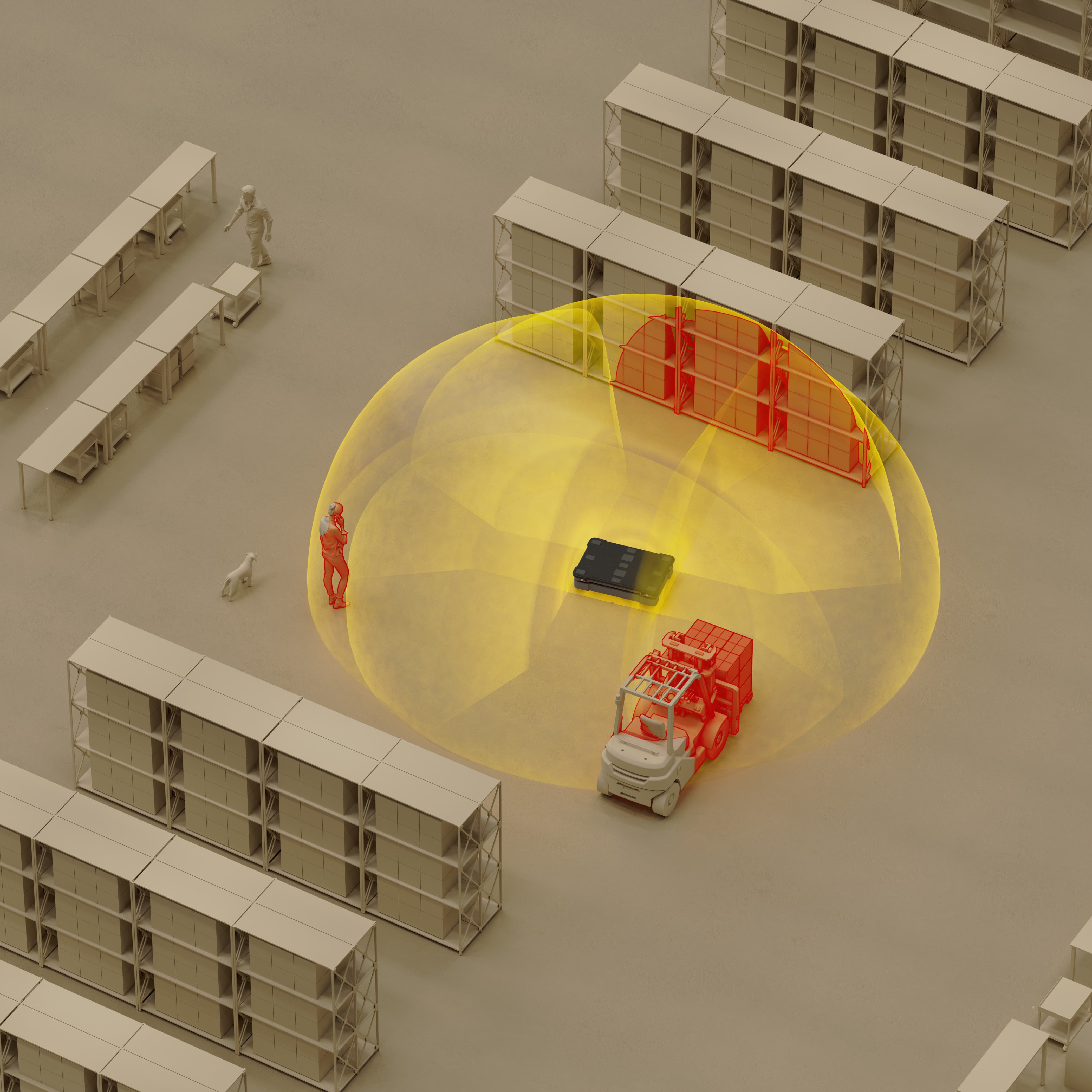
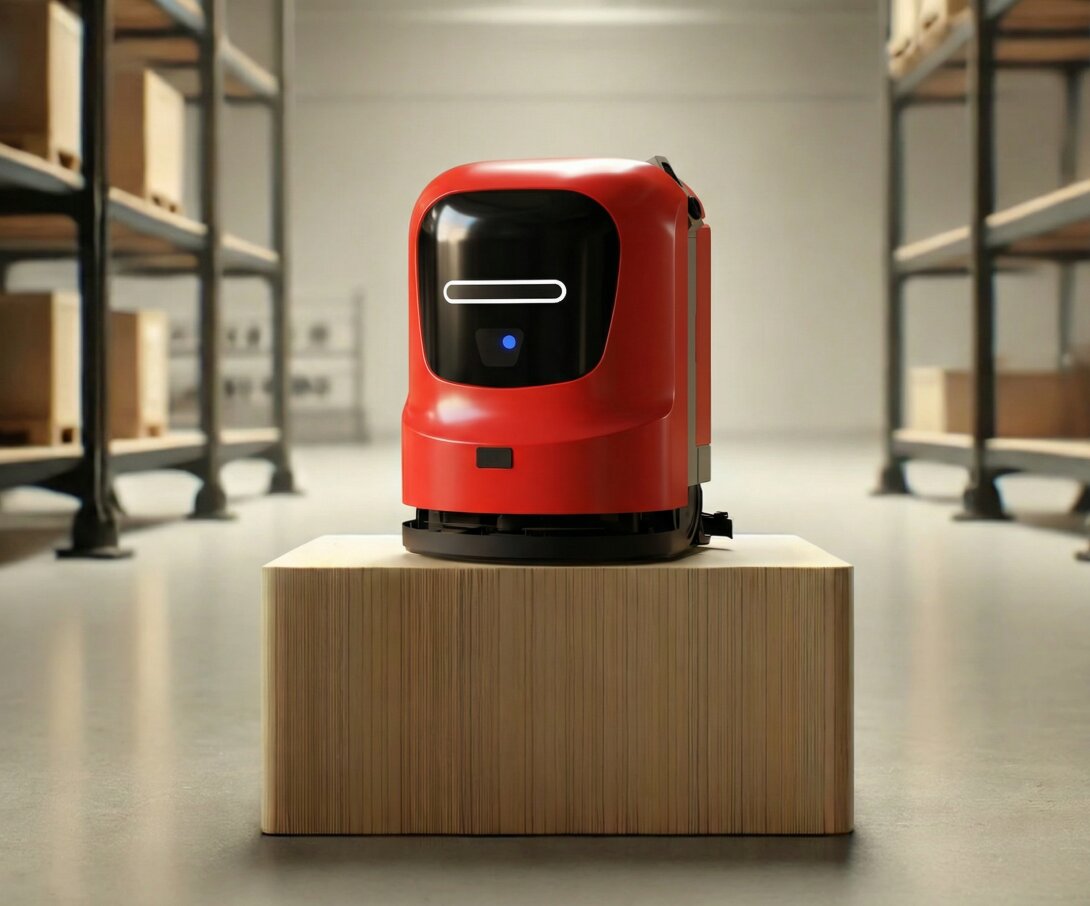
Mobile robots
Deploy ADAR on autonomous robots in in warehouses, factories, logistics, retail environments, hospitals and more.
Why ADAR? Full 3D views with 180x180° views above and below the 2D plane, easy integration, immune to light conditions and dust.
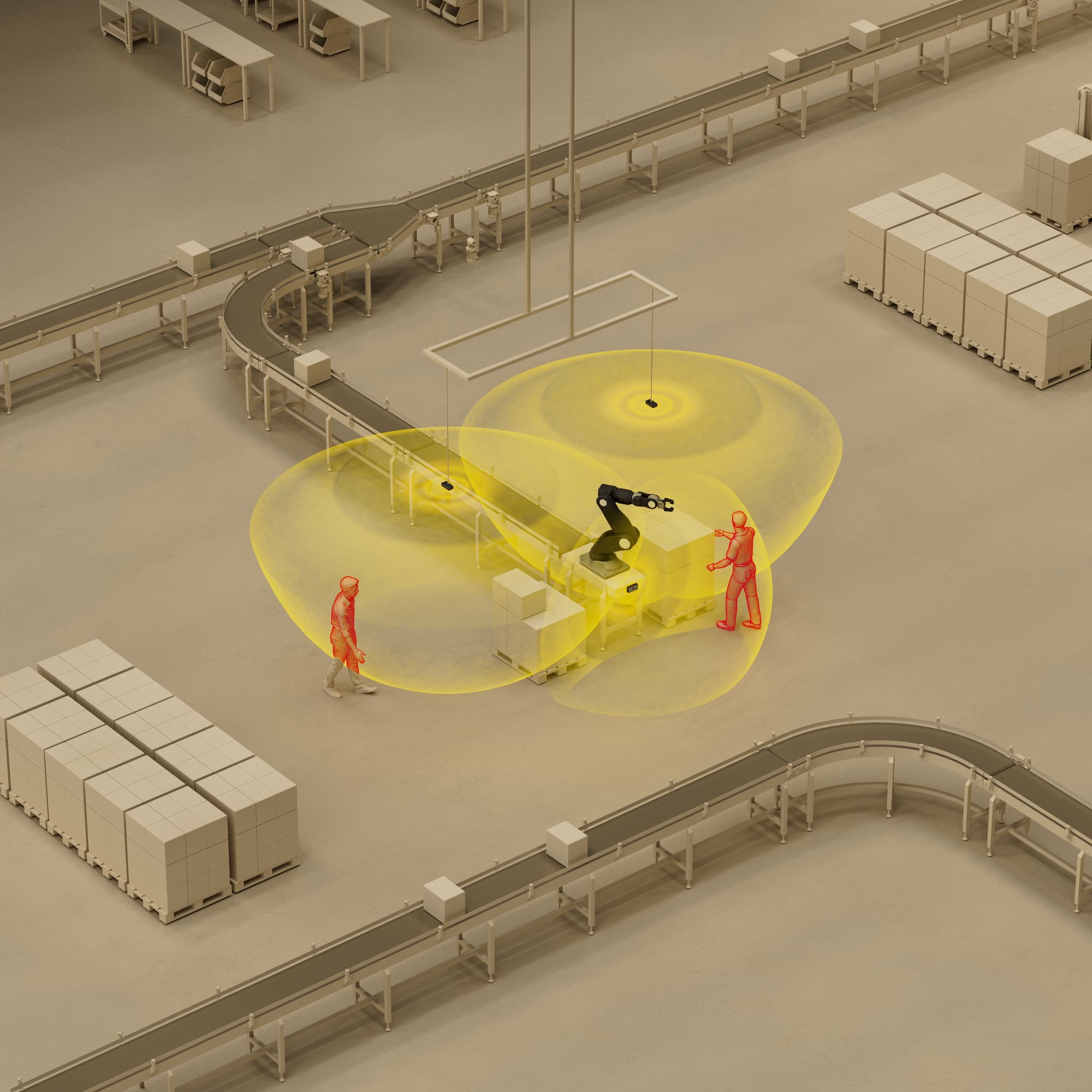
Machine safety
Place ADAR in places like robot cells, palletizers, CNC machine tending, and packaging lines
Why ADAR? No more single planes, robust operation, one device for any application, precise and dynamic safety zones
An engineer’s silent questions about ADAR
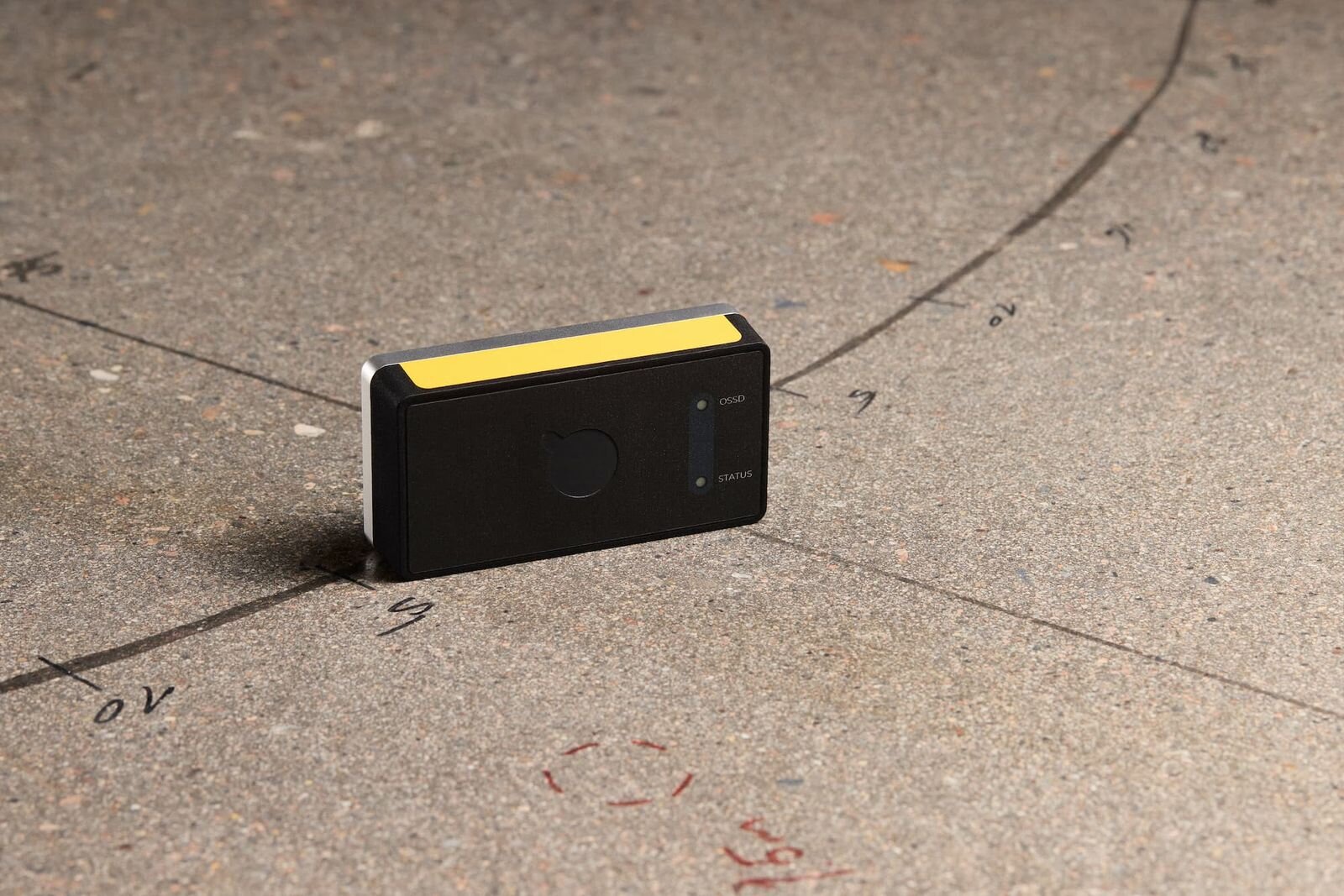
Help me understand. How real is this?
Very real. ADAR isn’t a lab experiment. It’s built on 25 years of research at SINTEF, combined with two decades of MEMS development and safety engineering. A proven engineering team brought the technology from concept to prototype in 18 months and then launched the first commercial product nine months later (in June 2025). More than 50 global robotics, automation, and automotive companies have tested the technology in real-life environments. The first robots to ship with ADAR emerged in March 2026.
In terms of the technology itself: What’s new is that it’s finally practical: dense ultrasonic arrays, real-time processing, and a form factor that actually fits into robots.
If you want the deeper dive, we break down the physics and hardware in this article:
https://www.sonair.com/resources/how-sonairs-adar-is-redefining-safe-robotics-sensingDoes this actually solve the problems LiDAR doesn’t?
Yes, because ADAR approaches the problem differently.
Safety-certified LiDAR samples the world in a 2D plane using laser beams. ADAR monitors a full 3D volume using a continuous ultrasonic wave field. That means you’re not stitching together slices, you’re aware of the entire space.
With 180° × 180° coverage, you don’t miss what’s above, below, or in between. The robot gets a true spatial understanding, not just a cross-section.
It’s especially useful for:
- Low or hanging obstacles
- Glass, reflective, or low-contrast surfaces
- Dynamic environments where “flat” sensing breaks down
Will this break my safety architecture?
No. If anything, it’s designed to fit into it.
ADAR has been developed with functional safety in mind from day one (IEC 61508, ISO 13849 PL d, SIL2 roadmap).
That means:
- Predictable behavior
- Deterministic processing
- A clear path to certification
Can I test and integrate this without too much pain?
Yes. That’s been a priority.
You can start with an evaluation kit, get data quickly, and see how it behaves in your environment without reworking your whole stack.
Most teams begin by:
- Running it alongside existing sensors
- Validating edge cases (what LiDAR/cameras miss)
- Gradually integrating it into safety logic
You don’t have to “bet the system” to try it.
Is this worth my time to explore further?
If you’re dealing with real-world complexity, the answer is yes.
The signal is simple:
If you’ve ever had to compensate for blind spots, false positives, or fragile sensing… this is worth a closer look.
At minimum, it’s a new tool. At best, it simplifies your sensor stack and improves safety at the same time.

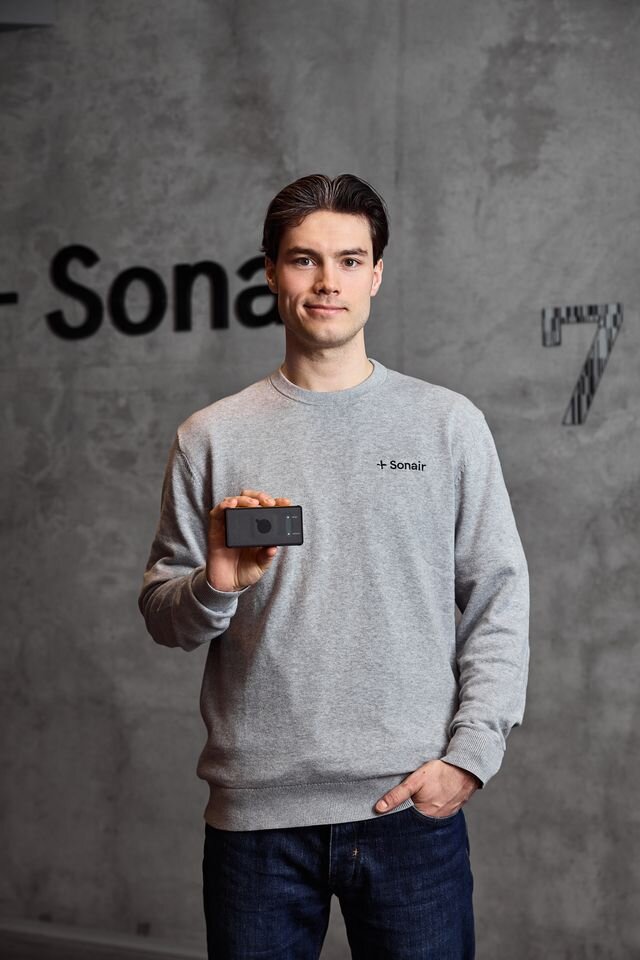

“Breaking the boundaries of physics by moving 3D ultrasound scanning from water into air.”
DIRA Teknologiprisen jury
Get started
Begin with our test kit to evaluate ADAR on your robot, validate safety zones, and integrate into your control system, then scale seamlessly to production.
COST
Ask for pricing
- 1 or more ADAR sensors
- Test kit or commercial versions
- Ships for plug and play mounting
- Technical and onboarding support


hello@sonair.com
Gullhaug Torg 2D
0484 Oslo
Norway
