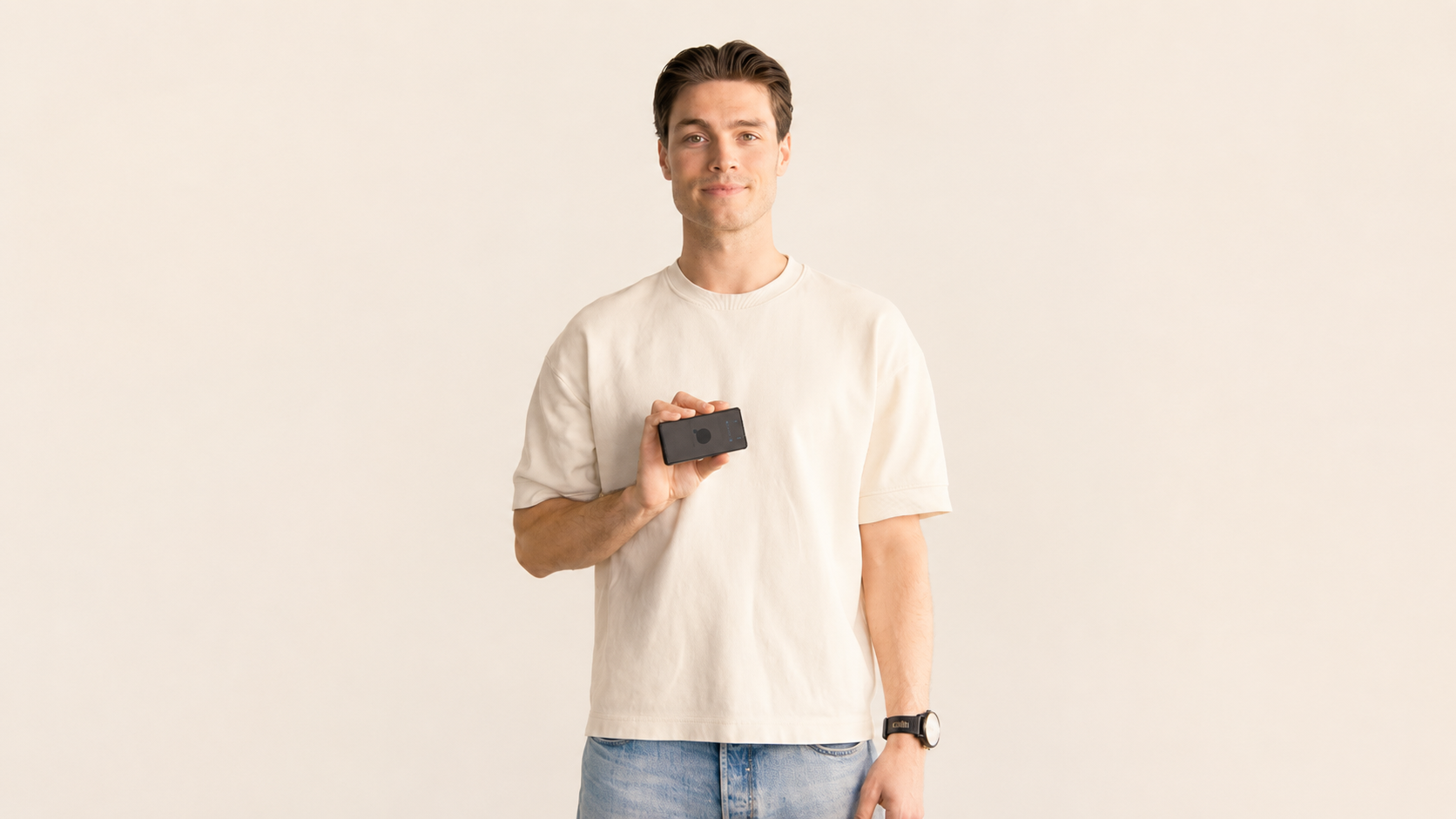
Simen and ADAR One

Documentation and tools

Trademarks: Sonair and ADAR

See where the Sonair and ADAR trademarks are registered and how to write them in copy, product materials, and partner communication.

Sonair™ and ADAR™ are trademarks of Sonair AS. This page lists where they are registered and how to write them. It's for our team, customers, partners, investors and anyone writing about us.

The short version

  1. 1Write the names exactly: Sonair with a capital S, and ADAR in capitals. Not SONAIR, Adar or A.D.A.R.
  2. 2Put ADAR in front of a noun: ADAR One, the ADAR sensor, ADAR Designer. ADAR names our products. It isn't the name of a type of sensor.
  3. 3Use ™ once: at the first or most prominent use on a page, slide or document. Leave later mentions plain.
  4. 4Use ® only where a mark is registered. See the table below. If you're unsure, use ™.
  5. 5Don't build our names into yours: no product names, domains or social handles that contain Sonair or ADAR.

Registration status

TerritorySonairADAR
Norway RegisteredNo. 334391 RegisteredNo. 338689
European Union RegisteredIR 1860894 RegisteredIR 1911021
United Kingdom RegisteredIR 1860894 Registered

Last updated 24 September 2026. IR = international registration under the Madrid Protocol, extended to the territory shown.

How to write them

A trademark stays strong when it's used consistently to name one company's products. The guidance below is mostly about good writing, and the legal protection comes with it.

WriteAvoid
ADAR One detects people in 3DAn ADAR detects people in 3D
Two ADAR One sensorsTwo ADARs
The range of ADAR OneADAR's range
Robots equipped with ADAR OneADAR-equipped, ADAR-ified
ADAR One uses 3D ultrasonic sensingADAR technology, ADAR sensing, "radar, lidar and ADAR"
ADAR One™ from Sonair™ (first mention)™ on every mention

Why ADAR isn't the name of the technology: RADAR and LiDAR were once descriptions and are now general category words that nobody owns. ADAR reads the same way, so if we use it for the technology, others will too, and the name stops pointing to us. Keep ADAR for our products and describe the technology in plain words: 3D ultrasonic sensing.

If you work at Sonair

  • Use ™ at the first or most prominent use in anything external: web pages, datasheets, manuals, decks, press releases, and social graphics.
  • Add the ownership notice below to document footers, datasheet and manual templates, and the last slide of external decks.
  • Check this page before using ®. Registration is country by country.
  • Clear new product or feature names with marketing before using them, especially any that start with ADAR.
  • Report lookalike names or misuse to marketing. You don't need to act on it yourself.
Sonair

Our company and brand. The legal name of the company is Sonair AS.

When you mean the company in running text ("Sonair announced…"), it's a company name, not a brand use, and needs no symbol.

ADAR

Our product family: ADAR One (the sensor), ADAR Designer (configuration software) and the ADAR Python API.

New product names built on ADAR should be cleared with marketing before first use.

If you build ADAR into your product

  • You're welcome to say your product uses ADAR One. We'd like you to. Name it accurately: "equipped with ADAR One safety (or 3D) sensors from Sonair".
  • Keep ADAR and Sonair out of your own product names, model numbers, domains and ad keywords.
  • Don't suggest that Sonair certifies or endorses your whole system unless we've agreed that in writing. ADAR One's certification covers the sensor. Your system's safety case is your own.
  • For our logo, co-marketing or product badges, contact us and we'll send the assets and agree on how to use them.
  • Include the ownership notice on material that features our marks.

If you're a customer, journalist or analyst

  • Editorial writing doesn't need ™ or ®. Just write the names correctly: Sonair for the company, ADAR One for the sensor.
  • A short description if you need one: "ADAR One is a safety-certified 3D ultrasonic sensor from Sonair."

Ownership notice

Use the short version in footers and the full version wherever registration matters, such as legal pages, contracts or packaging.

Short

Sonair and ADAR are trademarks of Sonair AS.

Full

Sonair and ADAR are trademarks of Sonair AS. Sonair is a registered trademark in Norway, the European Union and the United Kingdom. ADAR is a registered trademark in Norway, the European Union and the United Kingdom.

Questions or permission requests: hello@sonair.com. This page describes how we use our marks. It is not legal advice and doesn't grant a licence to use them.

A final word, on orcs

ADAR, not Adar. One keeps people safe around robots. The other leads an orc army in The Rings of Power. For your production line, we recommend the first.

No items found.

No items found.

Your questions, our answers

What is the angular resolution of your sensor?

This concept is not easily definable with ADAR because a pulse is not sent out in a discrete angle. If you are familiar with LiDARs, angular resolution is the angular distance (in degrees) between distance measurements of 2 beams.

This does not apply to ADAR because it does not emit beams.The angular precision is 2° straight ahead and 10° to the sides. The sensor is able to distinguish between multiple detected objects, if the objects are separated by more than 2 cm in range relative to the sensor or by more than 15° from each other.If the two objects are positioned closer than 2 cm or 15° from each other, they will be detected as 1 object.

Precision is a measure of the statistical deviation of repeated measurements on a single object’s position.

What is the maximum of points you have in the point cloud?

The maximum number of points is very rarely a limitation to the sensor’s performance, because the total number of points needed to fully sense a scene is low. The ADAR technology reports 1 point per surface on any object, making the total number of points low. This is opposite to what one might be used to from LiDARs.

The relative sparsity of the point cloud is a fundamental feature of sound-based sensing, but this is not a sensor limitation as the point cloud will always contain at least 1 point per object within line of sight from the sensor.

Can the sensor distinguish between humans and objects among detected obstacles?

ADAR does not do object classification. The sensor is for people and object detection.